I often say a vote is a kind of prayer for the world we desire for ourselves and our children, and our prayers are stronger when we pray together. Democracy is the political enactment of a spiritual idea that each of us has within ourselves a spark of the divine. We all have value, and if we all have value, we ought to have a voice in the direction of our country. We ought to have a vote.
This country goes through moments when the democracy expands and when it contracts. The enactment of the Reconstruction Amendments expanded our country’s democracy with sacrifices paid in blood. Yet within two decades, the rise of Jim Crow laws would claw back the legal rights that Black American just gained. It would not be until nearly a century later, with the passage of the Voting Rights Act of 1965 and other civil rights laws—and again, only after blood of martyrs—that Black Americans would be recognized as fully equal in the eyes of the law.
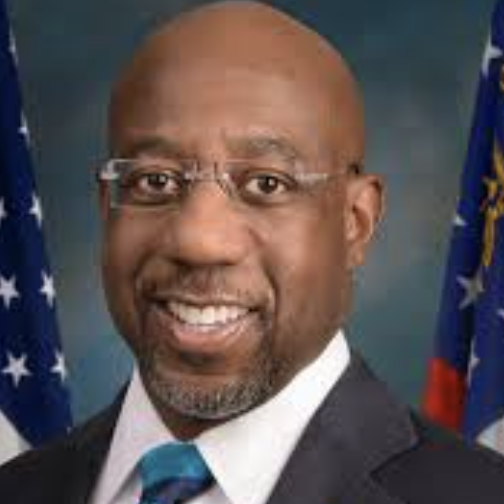
I feel lucky to be among the primary beneficiaries of the Civil Rights era: I have the privilege of sitting in the U.S. Senate today as the first Black Senator from Georgia. There is no way this could have happened but for the fights and the triumph of the Black leaders before me.
But in my lifetime, I have seen America enter yet again a phase of contraction. In recent decades, the creeping reach of dark money has alienated politicians from their voters. Our current president rose to prominence denying the citizenship of our first Black president. Since then, he has spread baseless allegations of voter fraud to attempt to rewrite the rules of our elections and Congressional maps across the country. The Supreme Court has enabled these efforts by gutting the 1965 Voting Rights Act, first by getting rid of preclearance, then making it nearly impossible to challenge discriminatory practices, and now, in Louisiana v. Callais, by greenlighting rampant gerrymandering.
These efforts to diminish the electorate have culminated in the erasure of Black voices across the South. Practically before the ink on the opinion was dry, Southern states began to redraw their maps to silence the voices of Black voters. Meanwhile, in Congress, partisan actors have sought to pass the so-called SAVE Act. This voter suppression and voter purge bill would make it harder for millions of Americans, especially married women, to register to vote, and it would require that states hand over their sensitive voter data to federal officials.
This two-pronged attack on our voting rights—to diminish our ability to access the polls and then for those votes to count—marks the most desperate attempt yet by the Republican Party to stop the American people from holding President Trump accountable for his failed presidency. They know that voter suppression and partisan gerrymandering are the only way Republicans can stay in power after breaking every single promise they made to the American people.
President Trump wants to let politicians choose who they represent, rather than letting the people choose who represents them. He wants to let the most powerful become even more powerful, even if it comes at the cost of democracy.
This is not new. Our country has long marched towards justice and met resistance at every step. Even after the Civil War, we watched our government pay compensation to White slaveholders while clawing back the ‘forty acres and a mule.’ It passed Jim Crow laws and codified discrimination in federal programs, excluding our families from building generational wealth. Even after the passage of the Civil Rights and Voting Rights Acts, the rise of mass incarceration has locked our brothers and sisters away, dividing families and denying our community their most sacred right to vote.
This question of who has the right to participate in our country—politically, economically, morally—is the oldest question in America. Slavery existed at the birth of democracy, and it was protected in our founding documents. Among our first ‘bipartisan’ compromises was that Black Americans were only worth three-fifths of a White American, and even then, only for census purposes—not to vote. Black Americans have always found themselves at the center of whether their very existence matters, whether they too merit respect, both morally and politically
I see those same exclusionary forces at work across this administration, as a new generation seeks to narrow what it means to be American. We are watching the Trump administration attempt to take away birthright citizenship, the basic right enshrined in the 14th Amendment that expanded citizenship to enslaved people and their children. Meanwhile, masked and armed men are using lethal force against our neighbors, calling them violent terrorists—all in the name of protecting ‘real’ citizens. In my home state of Georgia, federal agents incarcerated an honor roll student who has lived in this country since preschool.
As Black Americans, we have lived through this before. We cannot and will not remain silent. Like the brave men and women who marched in Selma decades ago, we must now make our voices loud in defense of our nation’s founding ideals. It is imperative that we put into practice, and into policy, the radical promise of equality.
And we, the people, are going to hold this administration—and every force of inequality and injustice—accountable. Just as the civil rights movement was born out of the unshakable promise that America belongs to “We the People,” we stand America ready to confront our country’s past injustices and achieve our greatest ideals.
We must stand together in full defense of our voting rights, which protect all other rights. At the end of the day, the one and only thing that can fix our democracy is the people’s voice. The most powerful words in our democracy are ‘the people have spoken.’ I will never stop fighting to protect the vote for each and every one of us.